Math in Nature
The Fibonacci Sequence: The Secret Number Pattern Hiding in Nature
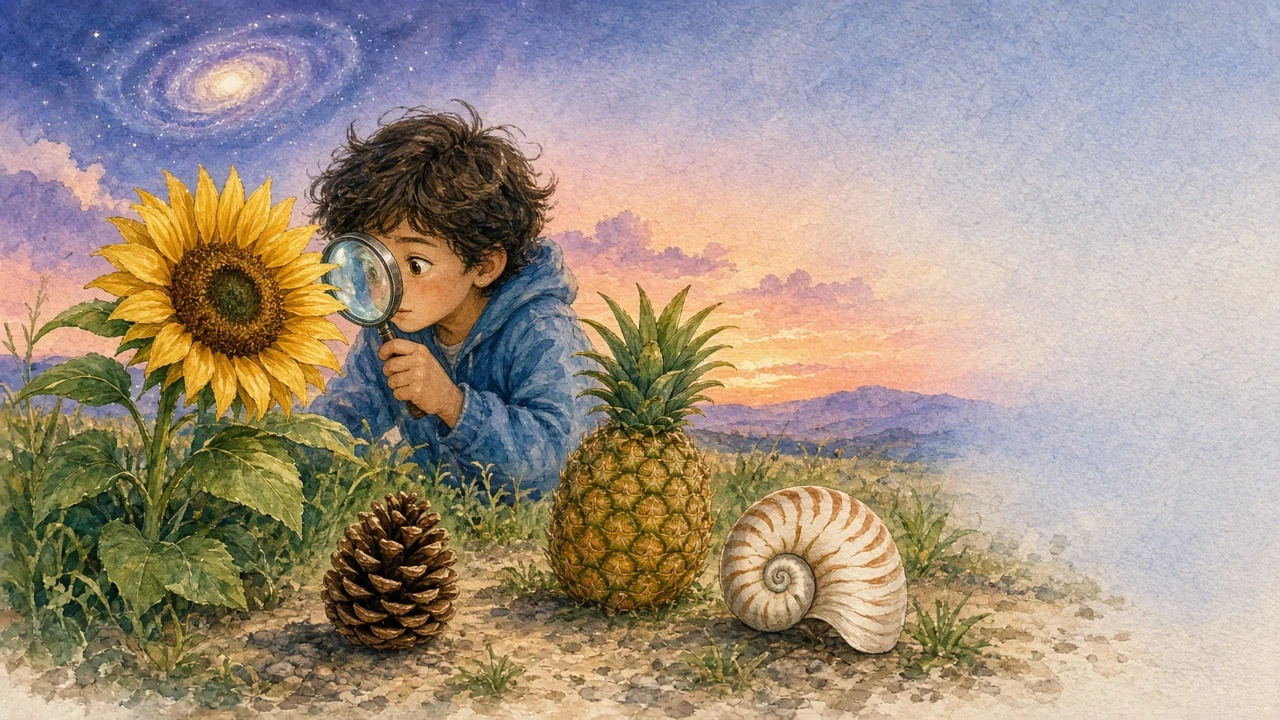
Have you ever looked closely at a sunflower, or counted the little bumps on a pineapple? If you have, there's a decent chance you walked right past something strange without noticing it. Both of them are built around the same hidden number pattern.
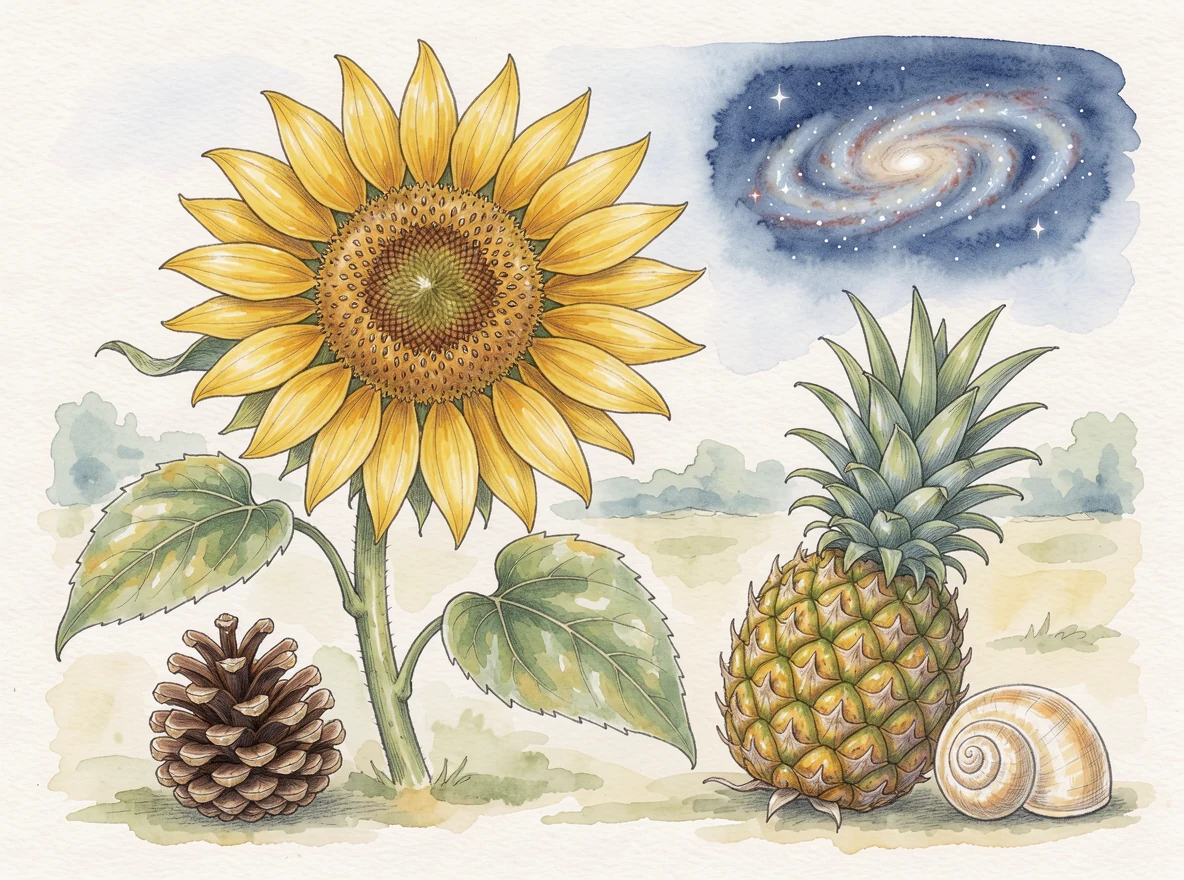
That pattern is called the Fibonacci sequence. Flowers, shells, pinecones, and even the giant spiral arms of galaxies all seem to follow it in one way or another. It's one of those ideas that, once you learn it, is hard to stop noticing.
So let's look at where it comes from, and where it actually shows up.
What Is the Fibonacci Sequence?
It starts with two numbers, 0 and 1. To get the next number, you add the two before it together. That's the whole rule.
- 0 + 1 = 1
- 1 + 1 = 2
- 1 + 2 = 3
- 2 + 3 = 5
- 3 + 5 = 8
- 5 + 8 = 13
Keep going and you get a sequence like this:
0, 1, 1, 2, 3, 5, 8, 13, 21, 34, 55, 89...
It never stops. You could sit with a pencil and keep adding numbers like this for the rest of the day and still never reach the end of it.
Try It Yourself
Grab a piece of paper and see how far you can go. What comes after 89? (Add 55 and 89 to find out.) Once you've got the hang of it, try pushing past 1,000 without using a calculator.
Who Found This Pattern?
About 800 years ago, there was a mathematician in Italy named Leonardo. Later on, people started calling him Fibonacci, and the name stuck. He wrote this number pattern down while working through a puzzle about rabbits: if you start with one pair of rabbits, and every month each grown pair produces a new pair, and none of them ever die, how many rabbits would you end up with after a year?
It's a strange thing to spend time on, but that's often how math discoveries happen. Someone starts with a small, almost pointless question, and something much bigger turns up underneath it.
Leonardo probably never imagined the pattern he found while thinking about rabbits would show up centuries later in flowers, seashells, and photos taken of galaxies from space telescopes.
The Spiral Hiding in the Numbers
If you take two Fibonacci numbers that sit next to each other and divide the larger by the smaller, you keep landing close to the same number: 1.618. Mathematicians call this the Golden Ratio.
Draw a series of squares using Fibonacci numbers as their side lengths, line them up next to each other, and then draw one curved line connecting their corners. The shape that comes out is called the Golden Spiral. For reasons that take a bit of digging to explain, this exact spiral shape turns up again and again across the natural world.
Where You Can Actually Find It
Sunflowers
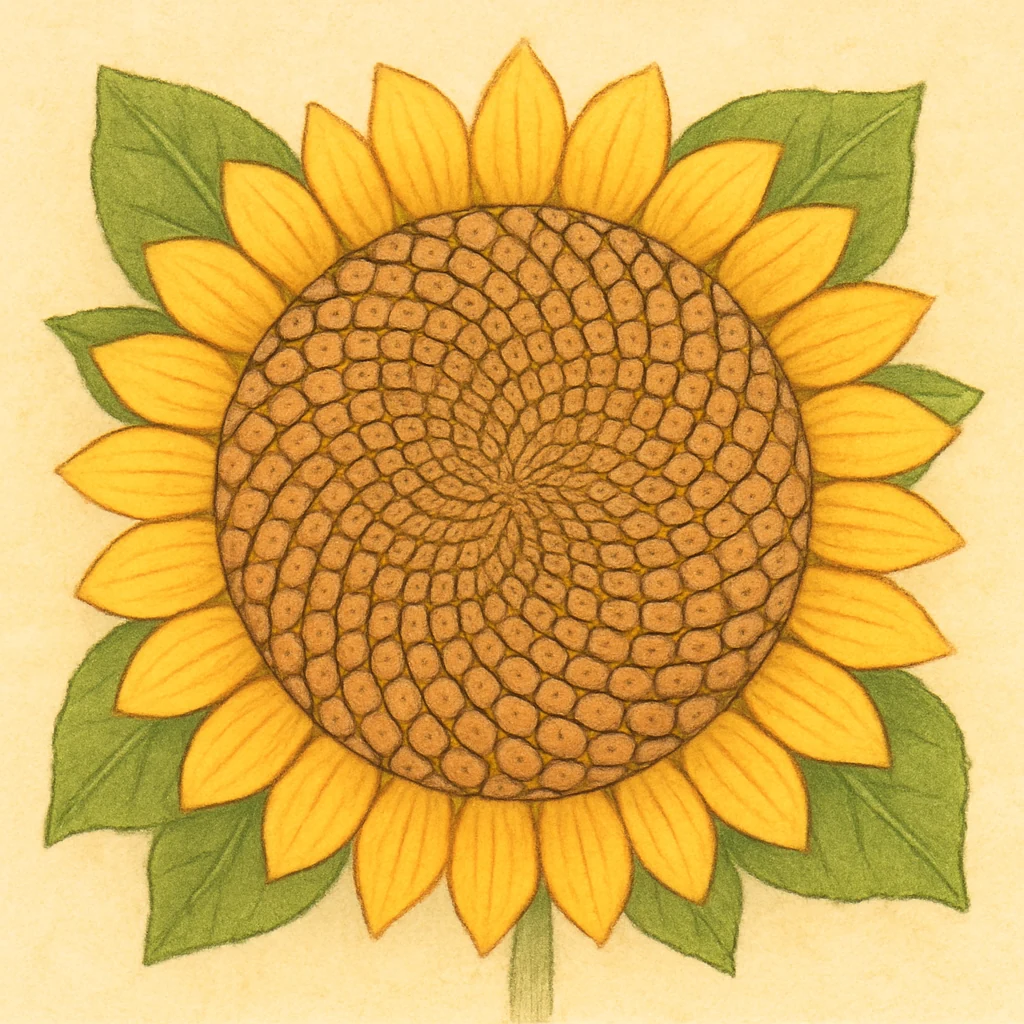
Look at the center of a sunflower and you'll see the seeds arranged in spiral lines, some curving one way, some curving the other. Count them, and you'll usually land on two Fibonacci numbers, something like 34 one way and 55 the other. Researchers have checked this on thousands of real sunflowers, and the pattern holds up far more often than you'd expect from coincidence.
Seashells
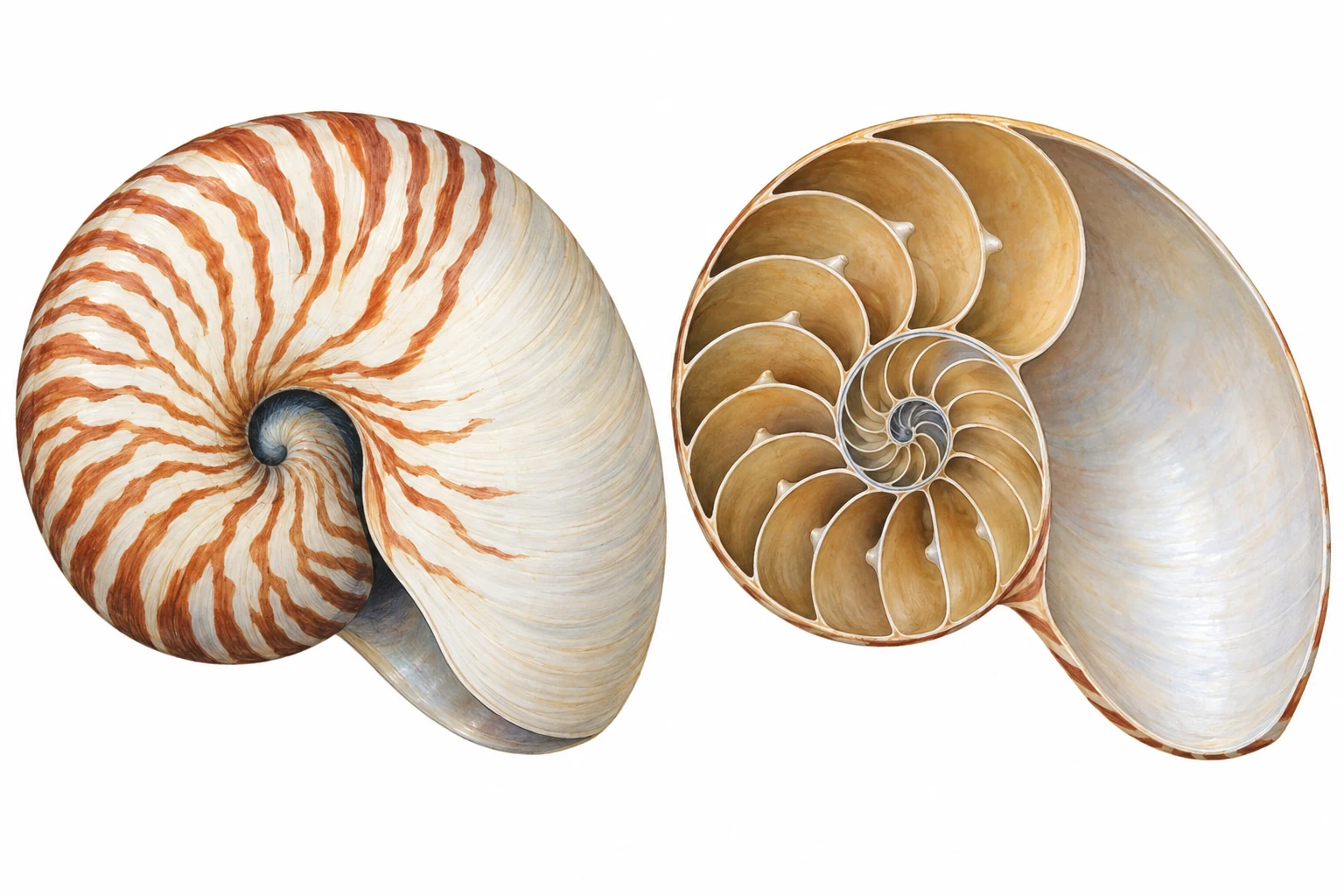
A nautilus builds its shell one chamber at a time, and each new chamber is bigger than the last but keeps the same proportions. The result is a spiral that looks a lot like the Golden Spiral, though if you measure it precisely, it's usually a close approximation rather than an exact match.
Pinecones and Pineapples
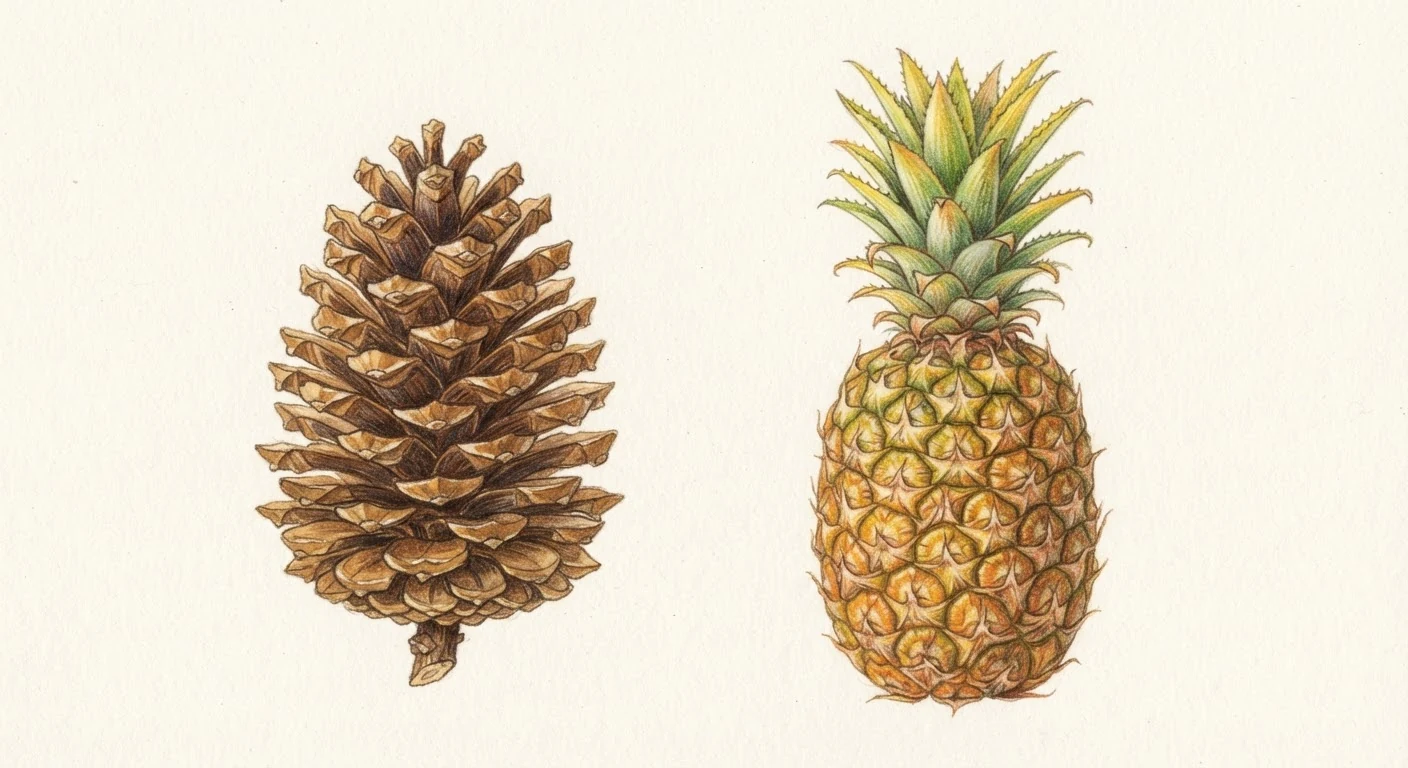
Look at the little sections on a pinecone or a pineapple and you'll notice they spiral outward in two directions at once. Count the spirals each way, and the numbers usually line up with the Fibonacci sequence.
Galaxies
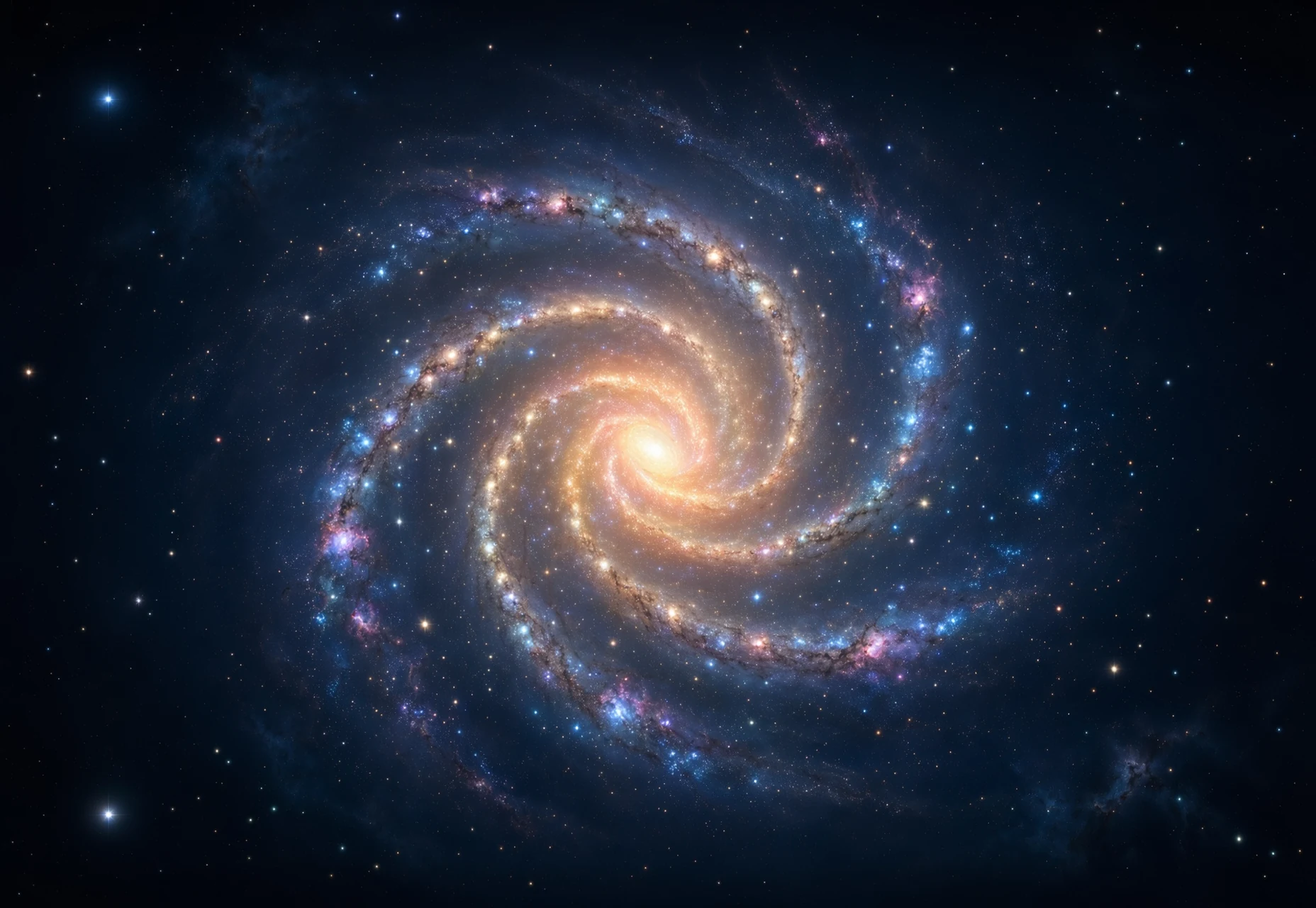
Spiral galaxies, including the Milky Way, curl their arms in a shape that resembles the Golden Spiral, though real galaxies vary a lot in how tightly or loosely they wind. The physics behind it comes down to gravity and rotation, not biology, but the resulting shape ends up looking surprisingly similar.
Honeybees
Here's a strange one: female bees have two parents, a mother and a father, but male bees hatch from eggs that were never fertilized, so they only have a mother. Trace a male bee's family tree backward, counting parents, then grandparents, then great-grandparents, and the number of ancestors at each generation matches the Fibonacci sequence exactly.
Is It Really Everywhere?
Not quite. It's worth being honest about this part, because a lot of what gets shared online stretches the truth. People have claimed that human faces, famous paintings, and ancient buildings were deliberately designed around the Golden Ratio. Most of those claims don't hold up once someone actually measures things carefully.
The real reason the pattern shows up so often in nature isn't magic. It's efficiency. This particular spiral shape happens to be an unusually good way to pack seeds, grow leaves, or build a shell without wasting space. Plants and animals didn't work this out on purpose. Over millions of years, the ones that happened to grow this way did slightly better than the ones that didn't, and the pattern stuck around.
Why Does This Keep Happening?
Every new seed or leaf a plant grows forms based on what's already there. If each new piece grows at a particular angle, close to 137.5 degrees, called the golden angle, the leaves end up spaced out so each one gets as much sunlight as possible without blocking its neighbors. No plant is doing this math on purpose. It's just what happens to work, so it's what nature kept repeating.
Try It at Home
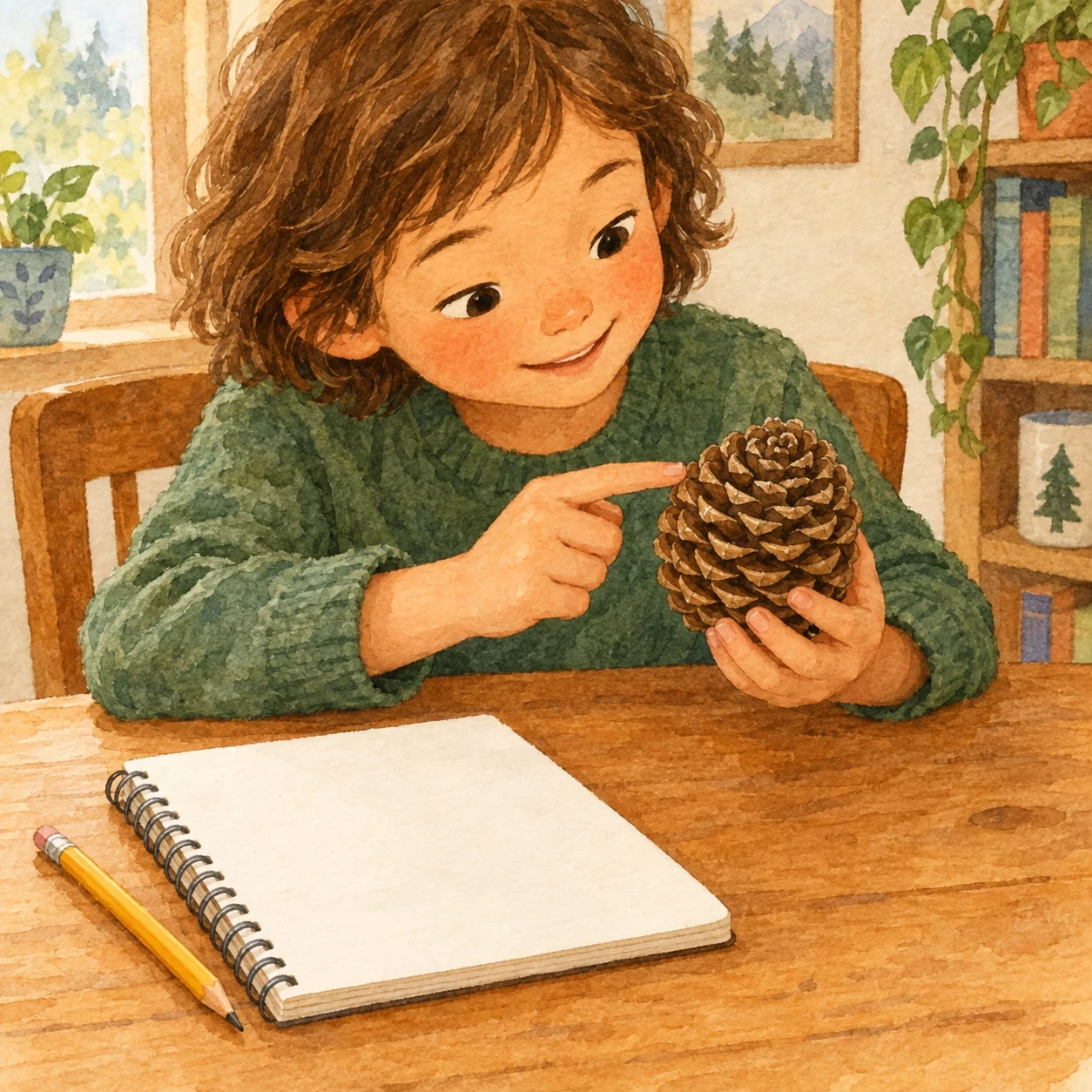
Next time you're at a grocery store, look closely at a pinecone, a pineapple, or a sunflower. Count the spirals going one way, then the other. See if the numbers you get match up with the Fibonacci sequence. You could even keep a small chart comparing different fruits and flowers to see which numbers turn up most often.
A Few Quick Facts
- It was first written down while working through a puzzle about rabbits.
- Sunflower seed heads usually follow the Fibonacci pattern.
- A nautilus shell closely resembles, but doesn't perfectly match, the Golden Spiral.
- A male honeybee's family tree follows the Fibonacci sequence exactly.
- Spiral galaxies curl in a shape similar to the Golden Spiral, though they vary quite a bit.
The Big Idea
The Fibonacci sequence comes from something almost too simple: just add the last two numbers together, over and over. That one small rule ends up describing spiral patterns in sunflowers, seashells, pinecones, beehives, and galaxies light-years away. Math isn't only something you do on a worksheet. It's sitting quietly in the world around you, waiting for someone to notice it.